Vallarta · Nayarit Real Estate Market
After several years of exceptional dynamism, driven by extraordinary factors such as the pandemic, workforce relocation, and unusually high global liquidity, the real estate market in Puerto Vallarta and Riviera Nayarit has entered a distinct phase: one with a wider offering, a more demanding client base, and, above all, greater maturity.
To construct a precise and responsible balance sheet, we gathered the insights of five leaders with consolidated track records and complementary visions of the regional market: Moray Applegate (Berkshire Hathaway Applegate Realtors), Alexis Silva (SB Realtors), Aaron Fisher (MexHome), Wayne Franklin (Tropicasa Realty), and Alejandra Vergara (INTERAMERICAN · Real Estate).
Throughout this analysis, their perspectives intertwine, contrast, and, on many key points, coincide: 2025 was not a year of crisis, but of adjustment; and 2026 is not shaping up to be a return to frenzy, but the consolidation of a more professional, strategic, and selective market.
2025: FROM ACCELERATED MOMENTUM TO NATURAL REBALANCING
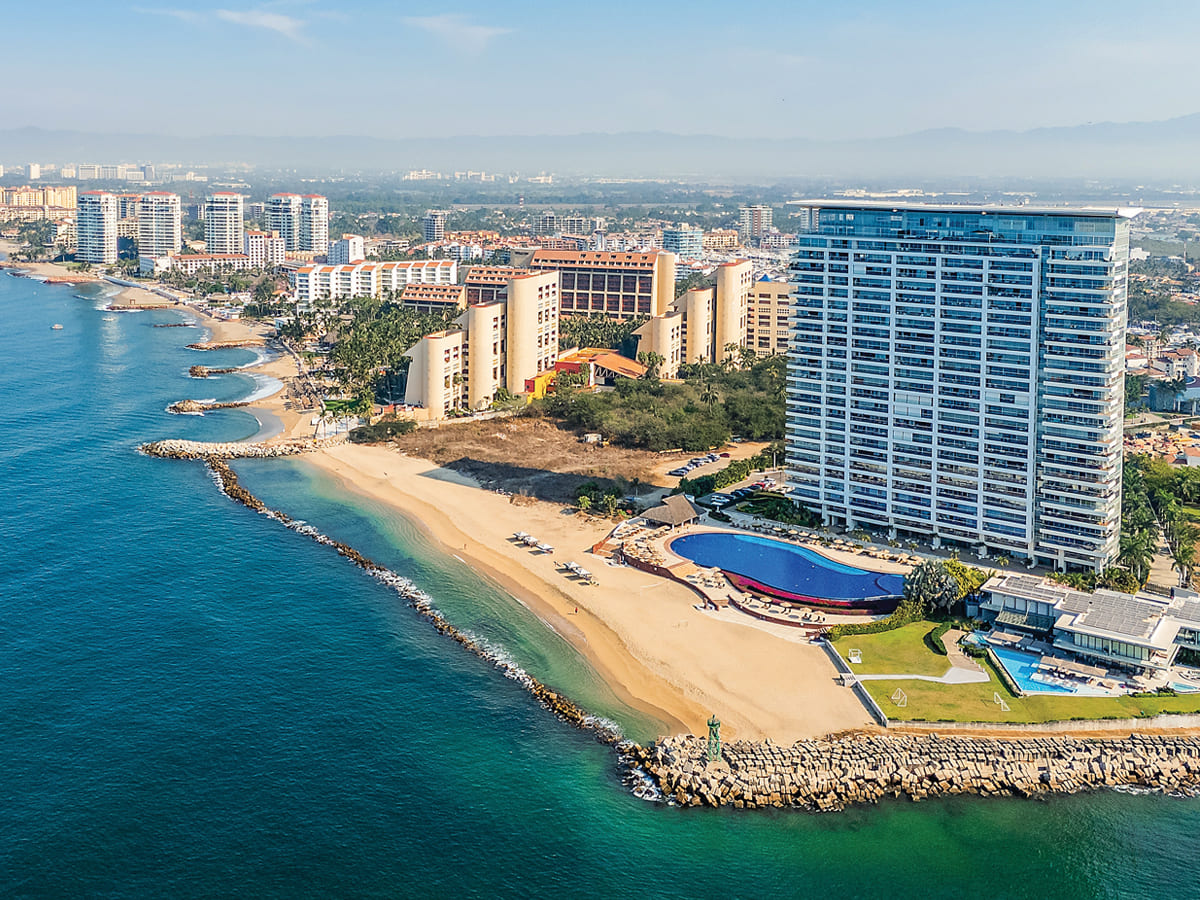
One of the first consensuses emerging among those interviewed is that the behavior in 2025 can only be understood in relation to previous years. For Moray Applegate, the starting point is the sheer magnitude of available inventory. “Today there are approximately 3,500 condominiums in the bay,” he points out, a figure that inevitably impacts absorption rates.
“The absorption percentage felt low compared to the amount of construction that was delivered,” he explains. From his perspective, this slowdown is not an anomaly, but a natural phase of the real estate cycle: after periods of high velocity, the market tends to pause and catch its breath.
Aaron Fisher concurs with this assessment, though he qualifies it with transactional behavior data. Analyzing the FLEX MLS Vallarta · Nayarit, he observes that the sales volume in 2025 is very similar to 2024, and even higher in some segments. “It’s not so much the quantity being sold that has changed, but the quality and the reasons for the sales,” he notes.
The market, he explains, began to normalize after the post-pandemic boom. Buyers were more intentional and selective, prioritizing prime location, build quality, close accessibility, and operational certainty.
Wayne Franklin provides a complementary view based on aggregated performance. Analyzing Year-To-Date figures, he highlights that the number of properties sold increased by more than 17 percent compared to 2024, while total sales volume grew by 28 percent, and the average price rose by about 8 percent. “These are positive trends that suggest sustained confidence in the market,” he affirms.
Collectively, these insights depict an active, but less impulsive, 2025; a market that continued to function, albeit with greater friction and discernment.
GLOBAL UNCERTAINTY AND FINANCIAL CAUTION: THE BACKDROP
If there is one overarching factor that marked the market sentiment in 2025, it was international uncertainty. Alexis Silva describes it bluntly as “a very complicated and complex year,” particularly due to the political and economic environment in the United States.
“The natural buyer decided to pause their purchases because their retirement—which is often invested in stocks—had downward adjustments of 20 or 30 percent in a very short time,” he explains. Stock market volatility reduced the appetite for real estate investment, especially among Americans and Canadians, the primary source markets for Vallarta · Nayarit.
Moray Applegate agrees with this diagnosis and adds the effect of the 2024 electoral processes in both Mexico and the United States. “There was economic uncertainty in both countries, and that inevitably affected buyers’ decision-making during 2025,” he comments.
Alexis Silva summarizes this behavior with a powerful statement: “In electoral years, people avoid real estate purchases due to the magnitude of the investment.” The result was a more cautious market, where many decisions were postponed, awaiting greater clarity.
However, signals of stabilization began to emerge toward the end of 2025. For Alexis Silva, the combination of gradually lower interest rates and the recovery of stock markets restored buyer confidence. “Money is becoming less expensive, and that motivates significant investments,” he asserts.

INVENTORY, ABSORPTION, AND THE CHALLENGE OF BALANCE
One of the most recurring themes in this editorial discussion is the balance between inventory and demand. Alejandra Vergara describes 2025 as a transition year toward a more balanced market. The increase in condominium supply contrasted with moderate demand growth, resulting in longer time-on-market and greater negotiating power for buyers.
“2025 has not been a year of deceleration, but of ordering,” she points out. From her perspective, the market began to leave behind the extraordinary buying pressure of the post-pandemic years to enter a more rational stage.
Moray Applegate reinforces this idea by projecting that the absorption of the current inventory will take longer than has historically been seen in the region. “All inventory, sooner or later, is absorbed. It’s a matter of time,” he affirms, emphasizing that this process does not imply a loss of structural attractiveness.
Wayne Franklin provides a relevant nuance: although absorption rates remain high in absolute terms, they have steadily reduced, falling from peaks of 42 months to around 35 months toward the end of 2025. This reflects a market that, while facing the challenge of high new supply volume, retains sufficient appetite to consume it.
The consensus is clear: the challenge is not the existence of inventory, but its quality, location, and alignment with what today’s buyer demands.
THE NEW BUYER: INFORMED, DEMANDING, AND STRATEGIC
Perhaps one of the most profound changes left by 2025 is not in the numbers, but in the buyer profile. Alexis Silva synthesizes it with a phrase repeated throughout the industry: “The client’s first question now is: show me your bridge loan (financing).”
The market sent an unequivocal signal: pre-construction (presale) alone is no longer enough. Buyers demand financial backing, transparency, and bank validation. “If a developer attempts to finance a project based purely on presales, my recommendation is to stop the negotiation there and seek another option,” he warns.
This new standard is also observed by Aaron Fisher, who notes that well-managed resales with verifiable rental history and strong Homeowners Associations (HOAs) performed particularly well in 2025. The buyer, he says, values operational certainty as much as design or views.
Alejandra Vergara agrees that the current buyer compares more, asks more questions, and takes more time. Location, exceptional amenities, functional design, and real differentiators became decisive. In this context, generic projects or those with unclear proposals faced greater difficulty.
Far from being interpreted as a threat, this change is read by the interviewees as a sign of market maturity.
ZONES, MICRO-MARKETS, AND REAL VALUE
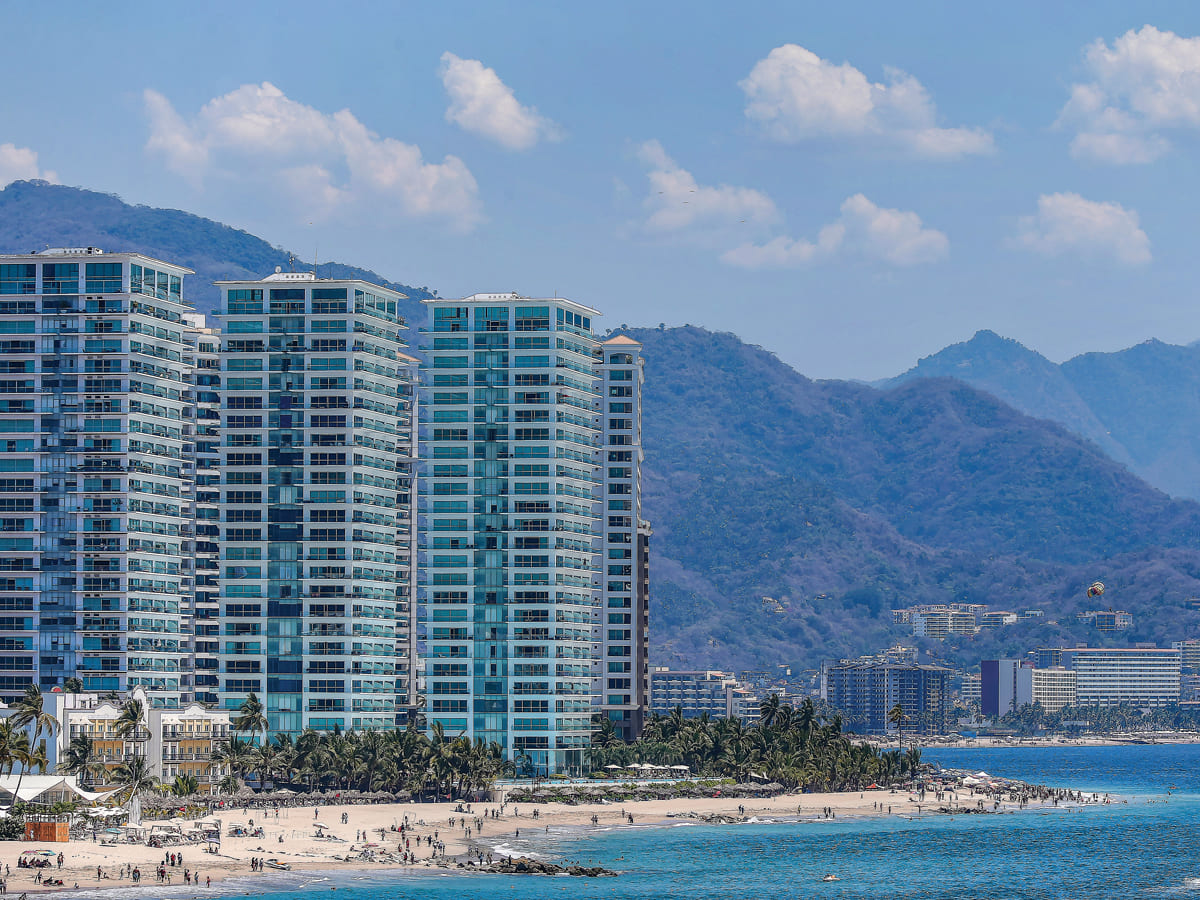
The behavior in 2025 was not homogenous. Aaron Fisher highlights that consolidated, central neighborhoods (such as Romantic Zone, Versalles, Emiliano Zapata, Marina Vallarta, and certain areas of Nuevo Nayarit) maintained solid absorption.
“Location remains the decisive factor,” he points out. Buyers were willing to pay premiums for walkability, views, strong management, and proximity to services.
Bucerías, in particular, stood out as one of Nayarit’s strongest markets, especially for beachfront projects. In contrast, peripheral zones or those in early stages of development experienced slower movement, particularly in presale.
Wayne Franklin complements this view by stating that the challenge moving forward will be maintaining reasonable pricing amidst the constant influx of new inventory. The balance between perceived value and asking price will be key to sustaining absorption.
2026: LESS EUPHORIA, MORE STRATEGY
Looking toward 2026, the general tone of the interviewees is cautiously optimistic. Alexis Silva projects a more stable international scenario, with less geopolitical tension and greater economic predictability. “If things remain stable, it could be a record year,” he affirms, though with a clear caveat: only for the projects that are executing well.
Moray Applegate anticipates that the market will continue to absorb inventory, albeit at a more moderate pace. The key, he says, will lie in patience and the destination’s structural strength, backed by air connectivity, road infrastructure, and continuous service improvement.
Wayne Franklin forecasts an increase in Mexican buyers, driven precisely by the new Guadalajara–Puerto Vallarta highway, as well as a rebound in U.S. demand. In the short term, he estimates that the Canadian buyers might slightly reduce due to currency effects, without compromising the overall market strength.
From a data analysis standpoint, Aaron Fisher projects sustained growth: moderate appreciation in prime locations, strength in the high-end luxury segment, and rental demand driven by tourism and remote work.
Alejandra Vergara agrees that we will not see a return to the accelerated increases of 2021–2023, but rather healthy appreciation, typical of mature markets. For investors, she highlights an attractive environment in rentals, provided the properties are well-located and correctly operated.
A LONG-TERM VISION
Beyond specific figures or projections, the conversation yields a shared conclusion: Puerto Vallarta and Riviera Nayarit are entering a new stage in their real estate cycle. A stage where professionalization, transparency, and real value substitute rapid speculation.
Far from weakening the market, this process strengthens it. As our interviewees point out, the opportunities are still there, but they require a better reading of timing, better execution, and a long-term vision.
For informed investors, developers and buyers, the message is clear: the market did not stop; it evolved. And in that evolution, Vallarta · Nayarit consolidates its position as one of the most solid and resilient real estate destinations on the Mexican Pacific.