Construction in Vallarta · Nayarit: Materials, Techniques, and Labor – Part I
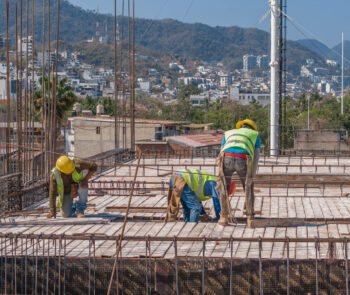
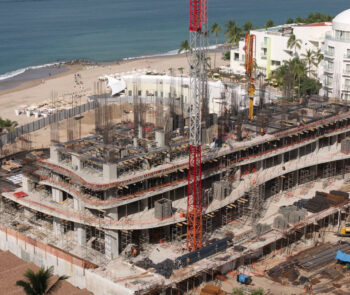
The arrival of national and international investors in our destination has triggered a wave of residential, tourism, and commercial projects that have transformed the face of the bay. In this active environment, the construction industry is not only an economic pillar, but also a gauge of the region’s ability to adapt to new demands with more efficient materials, innovative construction techniques, and a workforce capable of responding to the magnitude of growth.
In this issue, the Vallarta Real Estate Guide editorial team begins with a special feature dedicated to construction in Puerto Vallarta and Riviera Nayarit, where we will explore some of the factors that define development in our region.
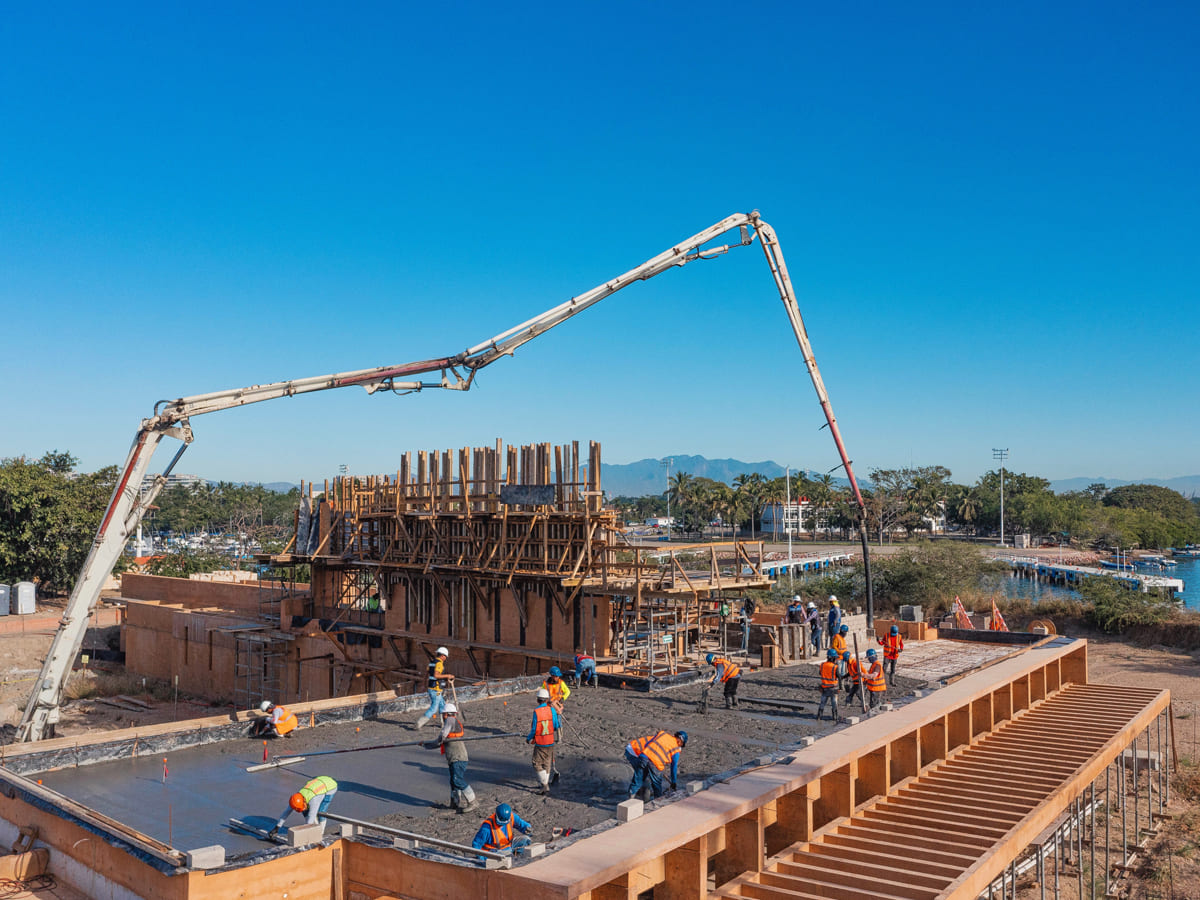
For José Luis Niño, a partner with development group Playa Lifestyle (a Vallarta-based company known for having developed, completed, and delivered the Urban I, Urban II, Las Verandas de Amapas, and Esquina Versalles projects), the local construction industry has some points of contrast. While some elements have remained almost intact over the past ten years, others are evolving rapidly, setting the course for what the future of real estate development in the bay will be.
“The reality is that actual construction continues on in the same way it did ten years ago: concrete and load-bearing walls. The difference now is in the finishes,” José Luis summarizes clearly. This perspective opens the door to an analysis of how the industry is responding to the real estate boom with available resources—and where it is headed in the coming years.
MATERIAL TECHNOLOGY: BETWEEN TRADITION AND INNOVATION
One of the key themes is the advancement of construction materials. Although structures continue to be mostly made of reinforced concrete with block, calcrete or brick, finishes are the field in which innovation has found fertile ground.
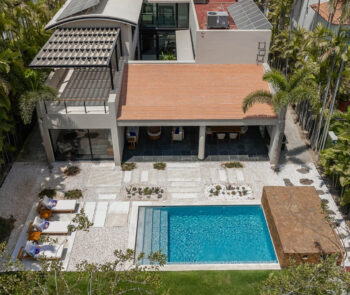
“New technologies in ceramic, porcelain and wood-effect PVC have opened up new possibilities for finishes that didn’t exist ten years ago,” he explains. These types of materials not only enrich the aesthetics of projects but also allow for more durable and affordable options without sacrificing a natural appearance.
Demand, however, maintains a strong attachment to authenticity. “Mostly, buyers are looking for projects to include wood and stone. However, quality imitations are now being used that reduce costs and offer very similar visual effects,” notes the architect. This balance between traditional and modern reflects the essence of the local market: an end customer who values durability and authenticity but is also willing to accept new solutions when they offer clear advantages.
When it comes to sustainability, the conversation is no longer optional. Compliance with environmental regulations requires reducing waste, planning more precisely, and considering design aspects such as building orientation and natural ventilation. “For example, rubble must be taken to authorized sites. This requires reducing waste during construction and, above all, better planning,” he emphasizes.
But, for buyers, a gap still persists between seeing sustainability as an added value and its actual weight in the purchasing decision. “If a potential purchaser finds a similar but more affordable home option, they are unlikely to pay more just because a project has ecological certifications. Price and personal taste continue to weigh more in the decision to buy.”
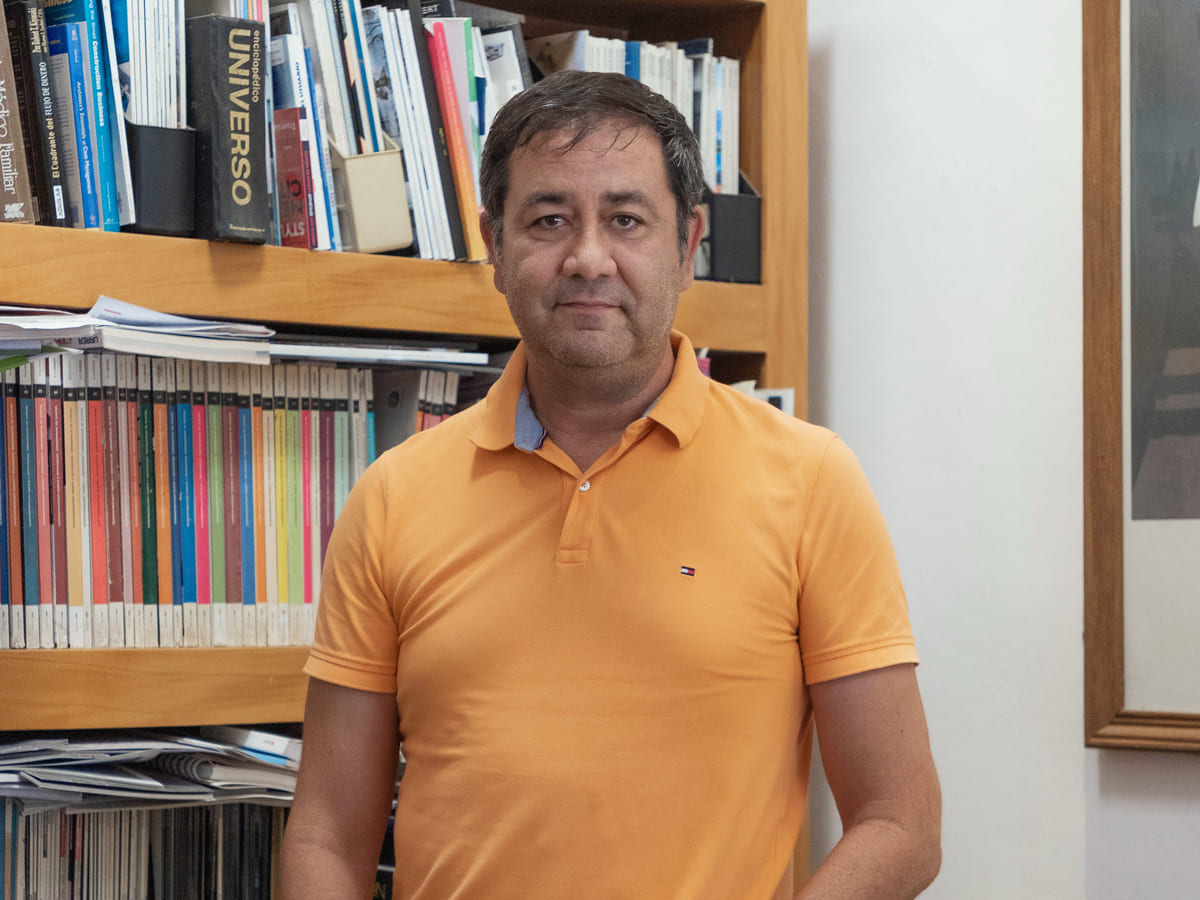
José Luis Niño, a partner with the development group Playa Lifestyle.
NEW CONSTRUCTION TECHNIQUES: EFFICIENCY AND TRUST
While there has been a clear evolution in materials, the outlook for construction techniques is more static. José Luis is categorical: “A seven-story building with 40 units still takes around two years to complete, practically the same time frame as it did 10 or 15 years ago.”
The use of drywall and other modern systems has yet to displace the preference for concrete and brick. “The end user prefers to feel that their home is solid, so these materials continue to be synonymous with confidence,” he notes. This limits the widespread adoption of lighter or prefabricated methods, even though they could speed up processes and reduce labor costs.
The challenge lies in convincing both developers and buyers that these construction techniques not only maintain quality standards but also offer tangible benefits in efficiency and functionality.
With this analysis of materials and techniques, we conclude the first part of our special feature on construction in Vallarta · Nayarit. In the second installment, we will address the topic of the workforce (the sector’s greatest challenge), as well as the direction the industry is heading and its future projections in one of the country’s most dynamic destinations.