Beachfront vs. In-Town Condos: Two Investment Models, Two Distinct Operating Strategies
In Vallarta · Nayarit, purchasing a condo as an investment involves far more than simply choosing an appealing location. Investors must understand how the property will perform after it is purchased: how much income it may generate, what it will cost to maintain, the type of demand it may attract, and the level of management it will need to continue producing revenue.
This is where an important distinction emerges between beachfront condos and those located in established urban neighborhoods, commonly referred to as in-town properties. Both are part of the broader Banderas Bay real estate market, but each respond to different patterns of demand, use, cost and operation.
The question, therefore, is not which model is better. It is which structure is more closely aligned with a particular investor’s objectives—and under what conditions it can operate efficiently.

TWO LOCATIONS, TWO VALUE PROPOSITIONS
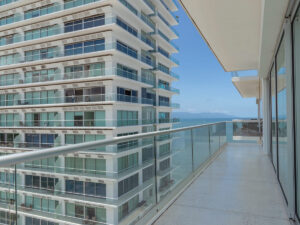
A beachfront condo begins with a feature that is difficult to replicate: a direct connection to the coastline. Ocean views, beach access, privacy and resort-style amenities can increase its appeal to both second-home buyers and short-term vacation guests.
In established destinations like Nuevo Vallarta, Bucerías and Punta de Mita, the property’s location also benefits from the limited supply of beachfront land. That physical scarcity may help support the perceived value of these properties and their return on investment over the long term.
The in-town model offers a different value proposition. In areas such as Marina Vallarta, Versalles and Fluvial Vallarta, a property’s value is more closely tied to its connection to the city: restaurants, shopping, services, mobility and the ability to meet many everyday needs without relying entirely on a car.
For some buyers, that connectivity can be just as important as an ocean view. A potentially more accessible entry price may also allow buyers to purchase more living space or a different floor plan with the same amount of investment capital.
The difference, then, is not simply what can be seen from the terrace. It is the type of experience—and the kind of demand—that the location offers.

THE INVESTOR PROFILE FOR EACH MODEL
For investors focused primarily on vacation rentals, beachfront property may be especially attractive because of its ability to offer a highly differentiated guest experience. Before projecting returns, however, investors must carefully evaluate occupancy, nightly rates, seasonality, HOA fees, maintenance costs and property-management expenses.
For those seeking a second home, the analysis needs to include an additional variable: personal use. A property may make sense financially in a different way when part of its value lies in providing an experience that is important to its owner. In this case, financial returns should not be considered as the only basis.
Cash-flow-focused investors will likely pay closer attention to the relationship between rental income and recurring expenses. HOA fees, maintenance, insurance, property management, utilities and the stability of rental demand all become particularly important.
Investors focused on long-term wealth creation may take a broader view. Potential appreciation, neighborhood development, liquidity and the profile of a future buyer are all part of a different equation than the one used by an investor seeking to maximize short-term income.
Finally, an investor with limited property-management experience may place greater value on predictable expenses, ease of administration and access to professional services. A more experienced investor may be willing to accept a more complex operation if they have the tools and resources required to manage it effectively.
OPERATING EFFICIENCY AND SEASONALITY
Operating efficiency also depends on a property’s ability to maintain consistent demand. From an investment perspective, efficiency is not measured solely by how much income a property can generate. It is determined by the relationship between its potential revenue and the resources required to keep it operating and producing income.
Beachfront condos are closely connected to leisure tourism and may therefore be especially well suited to short-term vacation-rental strategies. Under this model, average daily rate and occupancy are closely linked: increasing one does not necessarily improve overall performance if the other declines significantly.
Seasonality must also be considered. Performance should be evaluated across the entire year, not only during the months of highest demand for an accurate assessment.
In-town condos may appeal to a different and more varied demand base. Proximity to restaurants, services and urban activities can attract guests seeking extended stays, temporary residents, digital nomads and people who want to feel more connected to the city’s everyday life.
Depending on the property’s characteristics and applicable regulations, this may create opportunities for medium- or long-term rental strategies. For cash-flow-focused investors, lower turnover and the potential for more stable operations may be particularly valuable or appealing.
This does not mean that either type of location guarantees a particular occupancy level. The right question is what demand exists for that specific property—and which strategy can capture it sustainably.

THE TRUE VALUE OF AN INVESTMENT
Evaluating a condo as an investment requires a comprehensive view of its performance. The purchase price is only one part of the equation. Investors must also consider the property’s income-generating potential, the occupancy level it can sustain, recurring operating and maintenance costs, management requirements and the rental strategy that is best suited to its location and demand.
In this context, operating efficiency is not simply about generating more revenue. It is about generating revenue consistently, with a cost structure that allows the investor to retain a meaningful portion of it. By examining this relationship, investors can determine whether the expected return is consistent with the capital they have committed to the purchase, the intended investment horizon and the level of operational complexity they are prepared to assume.
Ultimately, location is only one variable in the equation. Beachfront and in-town properties represent two distinct models, each with its own attributes, demand patterns and operating structures. The efficiency of either model will depend on how those factors align with the investor’s specific objectives.
The right property, therefore, is not necessarily the one that generates the highest gross income or carries the most accessible purchase price. It is the one whose operations, demand, expenses, use strategy and long-term wealth potential align most coherently with the investment model the buyer intends to build.