Beyond Amenities: What Defines a Successful Real Estate Development Today?
For years, speaking of a successful real estate development in Puerto Vallarta and Riviera Nayarit implied mentioning a privileged beachfront location, spectacular amenities, and views capable of winning over any buyer. While these attributes remain highly valued, the evolution of the market has transformed the priorities of those looking to acquire a property in the region today.
In an environment where the real estate supply has diversified, the purchasing decision no longer depends on a single element. Today, a successful development is one that manages to integrate design, functionality, profitability, and quality of life within a cohesive proposal.
THE CONDOMINIUM CONTINUES TO SET THE PACE
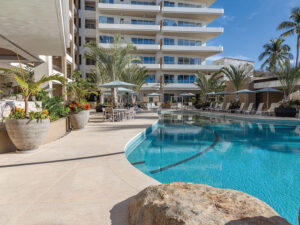
Within the inventory available in Vallarta · Nayarit, condominiums continue to be the most dynamic product. In particular, two-bedroom units remain among the most in-demand due to their balance of comfort, versatility, and investment potential.
This configuration responds to an increasingly common reality: many owners use the property as a second home during certain periods of the year and, when they are not occupying it, place it on the vacation rental market. The result is a product capable of combining personal enjoyment with income generation—two objectives that frequently coexist in the same purchasing decision today.
Consequently, interior design takes on special relevance. Well-distributed spaces, functional areas, and an architecture designed to adapt both to daily use and temporary stays are characteristics that directly influence a development’s appeal.
LOCATION REMAINS THE PROTAGONIST (WITH NEW CRITERIA)
The real estate maxim that everything depends on location remains valid, but today it is interpreted from a much broader perspective.
In addition to traditional ocean views or proximity to the beach, buyers analyze aspects such as connectivity, access to services, urban infrastructure, and the growth potential of each area. Ease of commuting and proximity to hospitals, supermarkets, restaurants, or recreational spaces are part of an increasingly strategic evaluation.
At the same time, zones that a few years ago remained off the radar of many investors are beginning to generate interest thanks to their urban development and prospects for capital appreciation. This has expanded the region’s real estate map and demonstrated that the value of a location also depends on its medium- and long-term projection.

AMENITIES WITH VALUE
Currently, buyers favor facilities that truly enrich the living experience or increase the property’s appeal within the vacation rental market.
Rooftops with social areas, pools well-integrated into the project, controlled access, gathering spaces, and zones designed for remote work are a few examples of amenities that bring tangible value today. Rather than simply impressing during a visit, they must respond to the user’s daily needs and contribute to the property’s competitiveness.
This evolution has also driven the growth of low-density boutique projects, where the residential experience, care in design, and attention to detail take on a role as important as the facilities themselves.
DESIGN WITH ITS OWN IDENTITY
There is a growing interest in projects that offer a defined architectural identity, quality materials, and concepts capable of differentiating themselves within an increasingly broad supply.
In this context, a well-conceived project transmits confidence, strengthens its market positioning, and tends to preserve its value better over time.
Authenticity is also beginning to gain ground over generic proposals. Developments that reflect the character of the destination, incorporate functional solutions, and prioritize quality over quantity find a better response among an increasingly informed buyer.
On the other hand, factors such as security, surroundings, the quality of the residential area, and the lifestyle offered by each community hold significant weight in the final decision. The property is no longer perceived solely as an estate or a financial asset, but as an investment capable of enriching the daily experience of its owners.
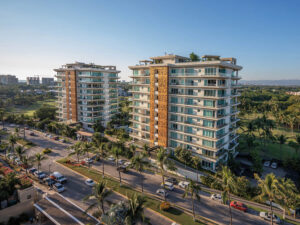
The evolution of Puerto Vallarta and Riviera Nayarit has given rise to a more informed, more analytical, and considerably more selective buyer. Consequently, it has also raised the standard that real estate developments must meet.
Today, the success of a project does not depend exclusively on a privileged location or a collection of flashy amenities. The true difference lies in offering a comprehensive proposal where design, functionality, connectivity, architectural identity, rental potential, and quality of life work together.